Q&A with Onjali Q. Raúf | The Boy at the Back of the Class
5 Mar 2026
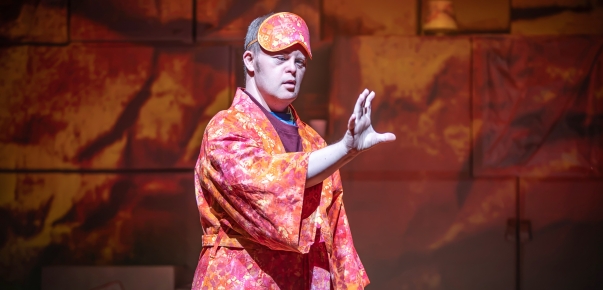
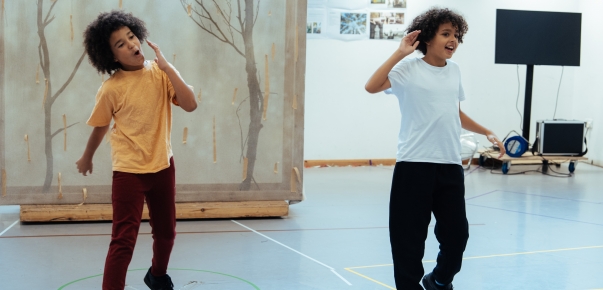
The Boy at the Back of the Class is a heartfelt and hilarious tale of a group of friends' adventure to reunite a refugee boy with his family. The story has been turned into an Olivier-nominated stage show, which will join us at Bristol Old Vic in March.
In celebration of World Book Day we put some questions to Onjali Q. Raúf, the author of the book, about what inspired the story and how it feels to see your novel adapted for the stage.
What first inspired you to write The Boy at the Back of the Class?
The inspiration for the book came from meeting a baby refugee in 2016, in the camps in northern France, which is where my teams and I deliver emergency aid convoys to this day. We had met his mother, Zainab, who had fled Afghanistan and was heavily pregnant, on a previous convoy. Of course, if you're a refugee whose money and papers are blocked, you can't simply go and get help at a hospital. So we raised as much as we could for her in London, and rushed back to France to use those funds to get her into a hospital. But on landing, we found out the baby had been born early. So I got to meet him – this little baby called Raehan, who had been born in those camps. I didn’t get to meet him for long, because just as we were leaving to go and figure out how to help them both further, we suddenly heard tractors and sirens: the police were coming in to demolish the camps, just as they continue to do today. Naturally, all the refugees fled for their lives, and no-one has seen baby Raehan or his mother since.
So that sparked the idea?
I would say it sowed the seeds, but there were still no plans to write a book. That didn’t come until half a year later. I fell really ill and ended up in hospital, for major surgery after near-fatal endometriosis, and all I could think about during my recovery was: "Where is that baby? Where did he and his mum flee to? Are they safe? Did they try and make that crossing over the Channel or cross borders back into Europe?" Suddenly this title The Boy at the Back of the Class jumped into my head and wouldn’t leave me alone. It was an answering to my ponderings of: "If this baby ever makes it to a safe country, what might walking into his first school be like? Who would listen to his story? Would he meet a bully and people who hated him on sight? Or would he meet people that really wanted to know about him and help him?" The character and the title got stuck in my head, so when I was well enough, I began writing this story. Then the real magic began!
What was it like for you growing up as a girl of British Bangladeshi heritage and how much of your own experience did you channel into the book?
I was born in Newcastle but I was only there for three years because mum skedaddled to get a job in London. Growing up in Newcastle and East London, you faced racism as a kid wherever you went – in fact, you're kind of almost shocked when you're not met with it. The experience of the narrator in the book is of seeing someone come into their classroom who is new to school, doesn't speak any English, is pale and clearly has no friends, and that is something I can relate to as the new girl coming into a new school. We moved around quite a lot when I was a kid and I went to four or five primary schools. I think most children can understand and identify that feeling of seeing someone new walking in who you're instantly curious about. If you're a good sort then you’re also that kid in the classroom who wants to make friends with them immediately too.
The book was your debut novel and was published in 2018. What was your job at the time and how did it feel when you held that first book in your hands?
I was working for a charity called the Limehouse Project in East London, which helps homeless families deal with all kinds of issues and state abuses. I spent 17 years whilst working in probably as many jobs, trying to sell a trilogy called The Legend of Arturo's Chocolate. My agent was in the midst of trying to find a publisher for it when I began working in the camps and wrote The Boy at the Back of the Class. Somehow, that story sold in two weeks - which is just insane and very surreal. Holding it in my hands as an actual book was electrifying - I think I cried for three days when it first came out. I'd dreamed of writing a book, having it published and getting it into bookshops since I was seven. To then see it grow in all the ways it has done - thanks to teachers, librarians, and children and parents talking about it - is absolutely incredible. I sort of see my book world as this fantasy realm squeezed in between my other real-life works – because of course, I still run two charities too. I get to step away from those sometimes difficult worlds into this really crazy, wonderful, innocent, beautiful, hope-filled environment where children are at the core. To this day, whenever I pick up this story or see any of the others, my first reaction is, "Oh my God, how did this happen?"
How does it feel seeing your story being brought to the stage?
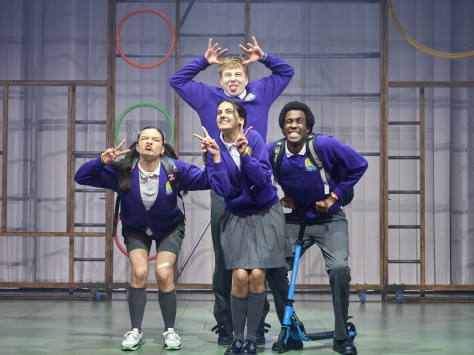
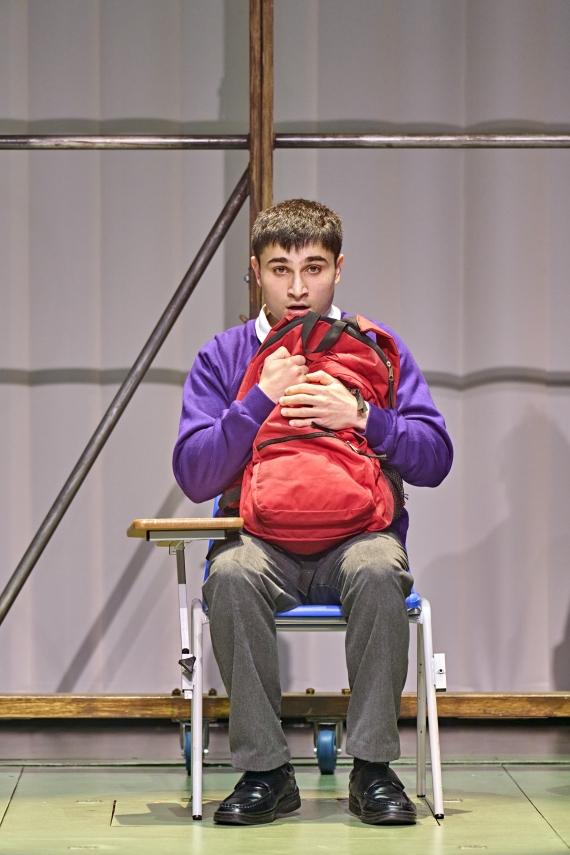
The whole experience of that first tour was petrifying and exhilarating and electrifying. Nick Ahad did such an amazing job with the script. I feel incredibly lucky because I don't think many authors have the chance of being part of the development process from the absolute go. Nick did a beautiful job with the visualisation of all the characters and bringing aspects of them to life through sometimes even the smallest of actions rather than words. As an author, I'm waffling all the time in my books, trying to convey what’s in my head to the page. It was incredible how Nick was able to pinpoint a moment, a feeling or a segue to something else so visually and swiftly. It's been a huge learning curve and I'm so appreciative that I got to be involved. One of the best things about the play is seeing children's reactions to the show – it's hilarious and different every single time. The reactions exhibited when they're with their friends as part of a school trip are so different to when they're with their parents or grandparents. I will always go to see as many shows as possible, because I love seeing their facial expressions when certain moments pop up, hearing their gasps or witnessing them wanting to jump up and get involved. It's incredible.
Did you find you had any common ground with Nick?
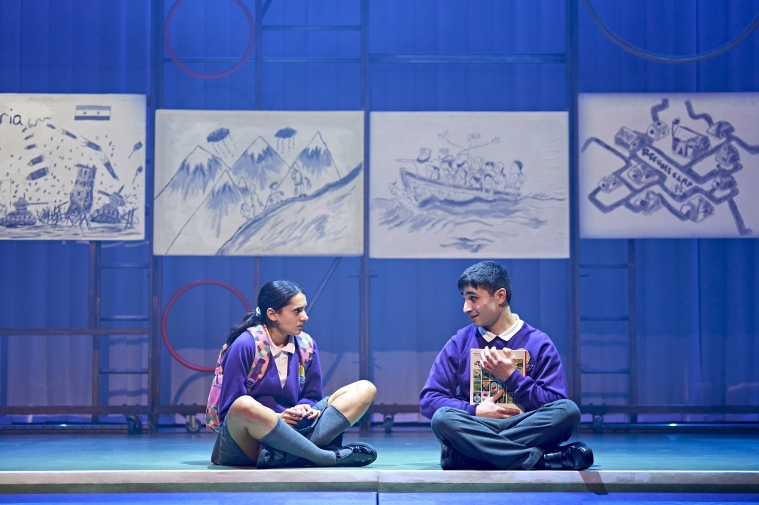
Many... As Nick is also of Bangladeshi heritage, he instantly understood the kind of reactions Ahmet would have to being new and an outsider. Nick really made Ahmet come forward and come to life as a character in his own right. In the book he's actually quite silent – we’re seeing him through the narrator's lens and view of him. In the play, Ahmet is this kind of roaring presence. We both know what it's like to be looked down on, bullied and treated as though you don't quite belong, and being constantly worried about how to make your way in a new school and the world at large. Nick understood that from the off and it really comes out in the script.
Does the story seem even more timely now than it did when the book was first published eight years ago?
I'm still doing book tours and I'm still getting hundreds of requests from schools to come in and talk about The Boy at the Back of the Class. That's not normal. In children’s publishing, the norm is a one-year cycle for a story, and then you move on to the next one. But there's still a deep hunger from children to know more about what they're seeing on their television screens and what they're hearing in the media about refugees. They have questions about gossip and the whispering that goes on, as well as all the political diction that is drowning out humane voices. The story is actually more relevant than ever and terrifyingly so. It's a sad situation.
How important is it that children are taught to understand why people become refugees?
It's of vital importance. I mean, how on earth are they going to be able to understand any of it if they are not given safe platforms for questions and safe access to real information? We are living in a world where our kids are inundated with news that has an agenda of its own. Nothing is neutral anymore. I think we're all waking up to that, but it's so much more relevant for our children to have safe access to stories that humanise what they're seeing on their television screens, on YouTube or wherever it is they're getting the information from – for them to understand that there is a history behind everything and that we are all linked. It's a global issue, it's not just a one-off thing happening somewhere far away. We're all interlinked and when they grow up they may even go on to help with the situation. That's where the hope lies. Right now we don't seem to have leaders in power who are capable of humanising the people that they are wilfullydehumanising for their own ends. It's going to be our children who are going to face the wrath of all of that.
What do you hope children take away from seeing The Boy at the Back of the Class on stage?
I think the main thing is them honing in on the power of questions, especially right now in 2026. How, the moment we ask our questions, we can set off ripple effects that we often can't see. So I'm really hoping that they leave theatres with a sense of how incredibly important their own questions are and that to keep the discussions going is one of the most significant things they can do. Of course, alongside this hope, I also want them to know the truth of what all children like Ahmet have been through, and get that no kid is going to turn up in a country without their parents or having survived a war, without a huge story behind them. That it is for us to listen and for us to give them time to tell their story, not to speak their story for them.