Bristol Old Vic and the Theatre Collection
2 Jul 2026Article by Julian Warren - Head of Theatre Collection, University of Bristol
The relationship between the University and Bristol Old Vic must represent one of the most enduring creative industry partnerships within the city. By 1946 the Theatre Royal on King Street had become home to the newly formed Bristol Old Vic Company and University Vice Chancellor Sir Philip Morris had become its Chair – a post he held until 1971. In 1960 Bristol Old Vic placed their archive on long term loan to the Theatre Collection. Students and researchers – along with the public – have enjoyed access to it ever since, and the Theatre Collection continues to work closely with Bristol Old Vic on heritage related projects.
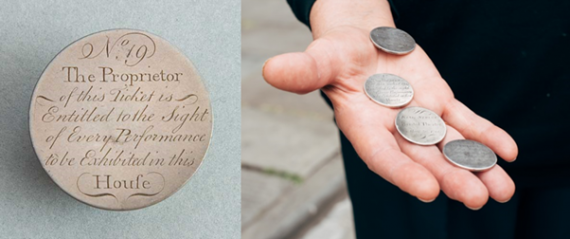
Bristol Old Vic is one of the oldest working theatres in the country. When it opened in 1766, fifty of the original £50 investors were issued, along with a share, a "silver ticket" which ensured free admission to all shows for themselves. Each ‘ticket’, a silver token, was engraved with its individual number and the words, ‘The Proprietor of this Ticket is Entitled to the sight of Every Performance to be exhibited in this House’, and on the reverse ‘King Street, Bristol Theatre, May 30, 1766’. Silver tickets could be transferred provided notice was given to the theatre mangers beforehand and each season, ticket holders were requested to register with the theatre. Throughout the C19th and early C20th various efforts were made to keep track of the names of those who had silver tickets in their possession, and in 2010 a Friends of the Theatre Collection volunteer led detailed research to bring this list up to date. Several silver tickets are now within public collections - the Theatre Collection has 8 within its care alone - and some continue in private ownership, but many remain unaccounted for. If you find an authentic one – there are some of dubious provenance - Bristol Old Vic will still honour them when presented at the Box Office.
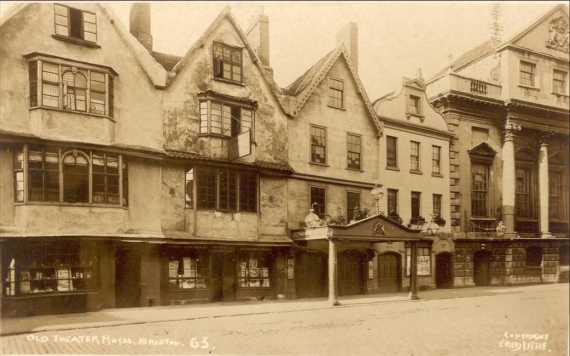
Perhaps less well-known is the story of the two ‘Bearers’ tickets, sometimes confusingly referred to as the ‘golden’ tickets as they are also, in fact, made of silver. Visitors to Bristol Old Vic today will know that the auditorium is set back a long way from the street front. Originally tucked behind a row of houses adjacent to the recently built and very grand Coopers’ Hall with its Palladian façade, access to the theatre itself was gained through a ground floor passageway of one or two of these houses, as illustrated by this nineteenth century photograph from the Bristol Old Vic archive. Although not shareholders, part of the land on which the theatre was developed had been in possession of Ann Crump and her husband Edward, a cabinet maker, and they were given special ‘Bearer’ tickets for “the great trouble and expense” that they had gone to, to persuade others to make over the land. But the whereabouts of either of these golden tickets was unknown until 2015, when one was donated to the Theatre Collection by Geraldine Menez. Geraldine’s great-grandfather, Henry Augustine Forse, a builder involved in the re-modelling of the theatre in 1902, had become fascinated with its history, collecting, amongst other things, a Bearer ticket.
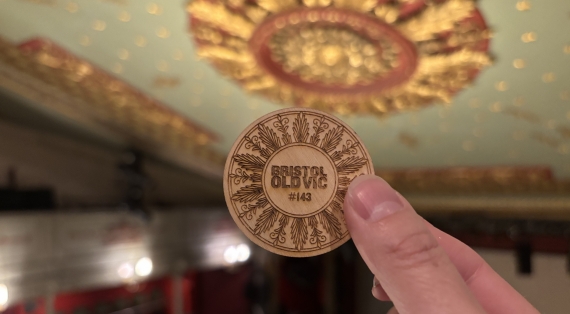
To mark the 260th anniversary, Bristol Old Vic has launched a birthday treasure hunt. A new set of commemorative wooden coins marking the theatre’s anniversary have been hidden at local landmarks, community hubs, cultural venues and places with deep Bristol Old Vic connections. If you find one, it’s yours to keep - a unique memento of the theatre’s 260th year – and if you show your coin at Bristol Old Vic’s bar before the end of June you can also claim a free birthday ice cream!