"A World of Corruption and Power" | In conversation with 'Dream' Designer Max Johns
2 Mar 2026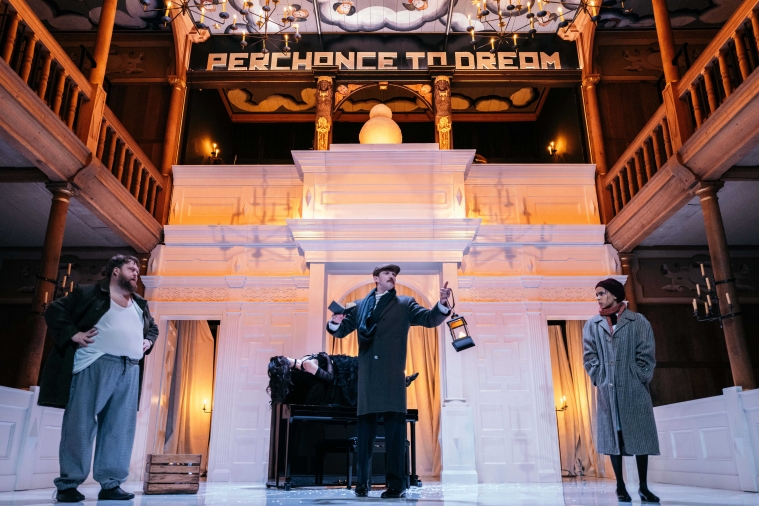
We're thrilled to be welcoming back set and costume designer Max Johns to Bristol Old Vic with the acclaimed new production of A Midsummer Night's Dream - a co-production between Bristol Old Vic, Headlong, Shakespeare's Globe and Leeds Playhouse. You may remember Max's beautiful design for Choir Boy in 2023. We asked him about his latest Shakespearean smash-hit.
What inspirations were guiding your approach to designing A Midsummer Night’s Dream?
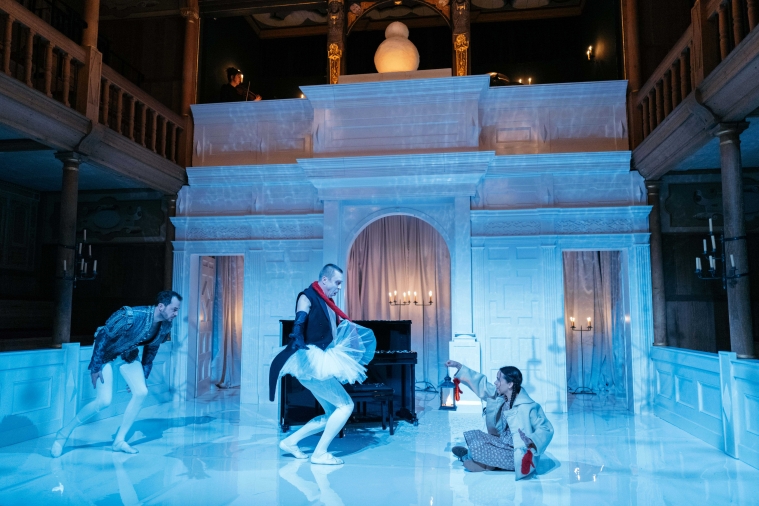
We started on the basis that the first iteration of our production was to be staged indoors in a candlelit theatre (The Wanamaker Theatre) in the middle of winter. And so we asked ourselves the question of what that does to the atmosphere of the play, what that does to the mood.
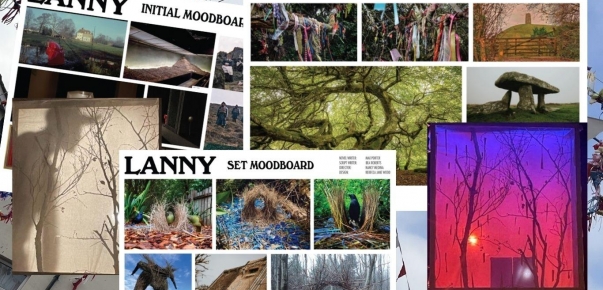
There’s so much reference to it being a midsummer celebration in this play. And we wondered, what if it is a midwinter celebration? Or what if we’re in the summer and actually the seasons have been turned on their heads and we’re experiencing snow and ice on what should be a summer’s day?
We looked at lots of films, like, The Death of Stalin, for the way it portrays comedy, but in quite a dark context, in a world of corruption and power. The Thief, The Cook, His Wife and Her Lover is another film that has been really inspirational as well, in terms of the sort of world it creates. It is again about power dynamics, sexual power and politics, combining in a world that’s quite dreamlike. We found the uncanniness of that world quite inspiring for our production.
I think for me, the magic in this play is a really big part of it and we’ve been asking ourselves, what is magic in a world that seemingly doesn’t believe in it?
This is a play that was written in a time where there’s a relationship with the occult and magic, it’s a kind of pre-enlightenment piece, and what does it mean now?
I think there’s something about candlelight that takes us all back to a time where a belief in the magic and the mysterious and the esoteric was so much more in our bones.
How will the set serve the story as it shifts between an aristocratic wedding and a darker fantasy of the forest or the woods?
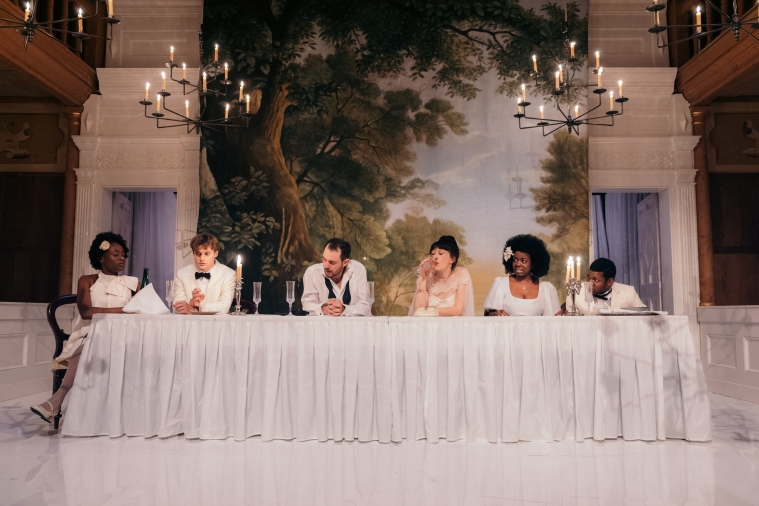
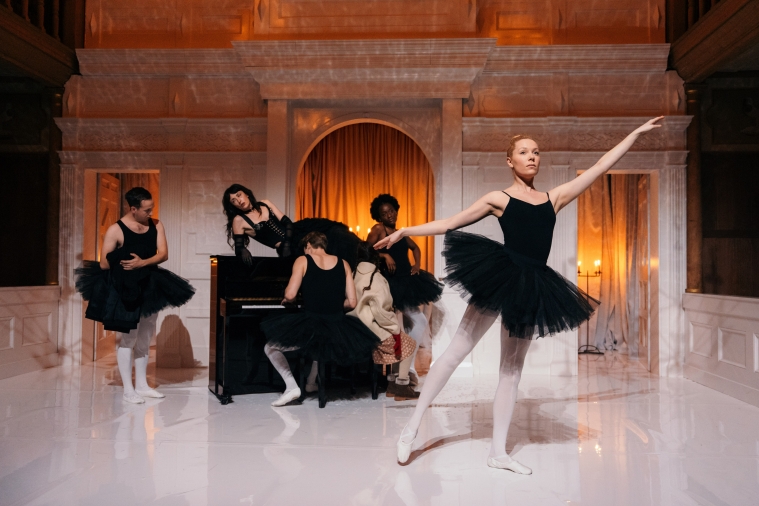
So, we begin the play at Theseus and Hippolyta’s wedding and it’s a very opulent four day extravaganza, feasting and celebrating, and it’s in their palace in Athens.
Then, when we go into the forest, some of that architectural detail starts to give way to a kind of softness and we had the idea to have curtains that billow in through the open doors like snow drifting in from the cold outside world into the interior.
I think there’s often an interesting dynamic at play in Shakespeare plays between forest worlds and urban environments. There’s usually a different set of rules at play in both. We see people going into the forest to seek a kind of chaos or capriciousness or an
escape. The characters are freeing themselves from the constraints of the society they’re in.
I think in this version of A Midsummer Night’s Dream, we were really interested in how we set up this quite tyrannical world of rigid power structures at the start, which then becomes a motivating factor, a place from which the lovers are fleeing and seeking exile in the forest. It ups the stakes of the whole thing and offers quite a lot of potential for transformation, because we return to that palace world at the end and no one’s quite the same as they were.
How will a costume design help carry some of the themes of power and transformation?
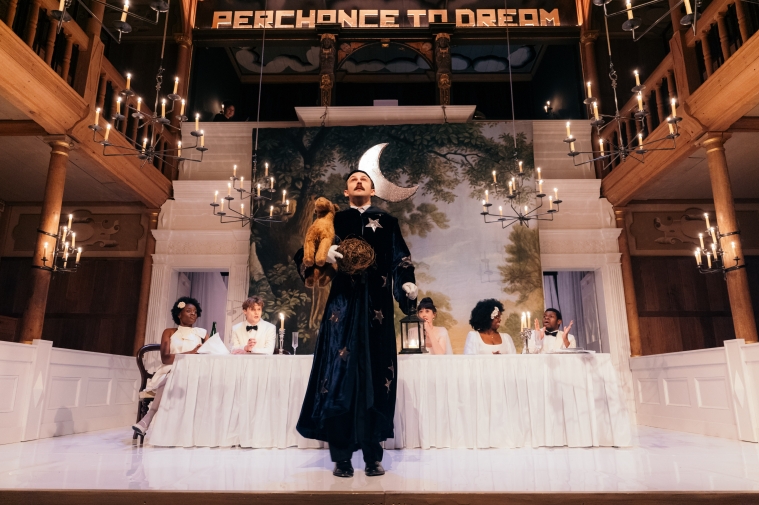
I think there’s a strong contrast between the design of the characters in the Athenian world of society, structure, the palace, and the people we meet in the forest. There’s an interesting dynamic between magic and social structure. So, we have much more tailored structured clothes in the palace world, and then give way to a much freer, more artistic form of clothing expression in the forest.
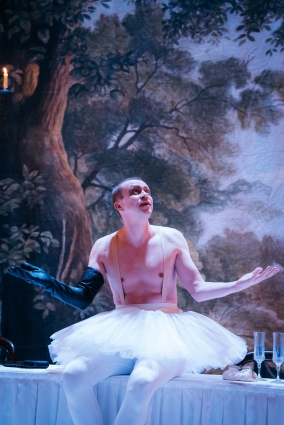
Fairies are based on ballerinas. So, we leaned into this idea that they are an almost stereotypical idea of what people picture when they picture a fairy, but they’re in black tutus and they come on in masks at times, they’re almost like these flies that zip around the space and land on different things.
We’ve been looking a lot at military clothing as well. There is a nod to the idea that the play begins with the ending of a war, and this sense that the characters have actually been through something quite traumatic. So we’re interested again in those structural powers, the blending of where politics and Military forces combine to create a tyrannical world in which we find the characters at the beginning.
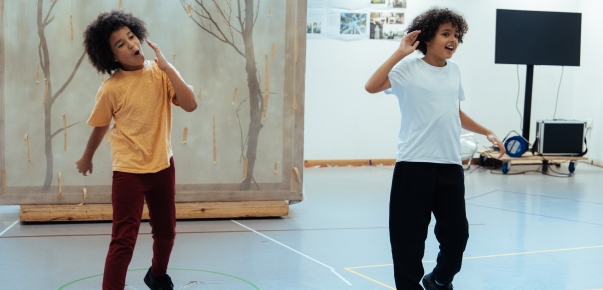
And then we have the third dynamic, which is our mechanicals. That was really fun because we got to play there. We were inspired by amateur dramatics companies and that long history of people staging theatre in a way that is kind of quite rough, and that relies on a suspension of audience disbelief.
Will there be a moment in the play where the design and the story will collide most powerfully?
Our moment of going into the forest is a real moment of transformation. So I think seeing the space subtly transform will be a moment where the way in which that space is used becomes the signifier of the transformation that’s taken place. We effectively make it so that the only way people can get on and off the stage is by coming through the audience.
We go from being very much in a kind of playing space that’s about the stage, to one that’s about a shared environment with the audience.